Every assessment starts with what the evidence actually says.
Read your documents, review the assessment scope, and trace supported conclusions to their sources. Keep evidence gaps visible so your team knows what to provide next.
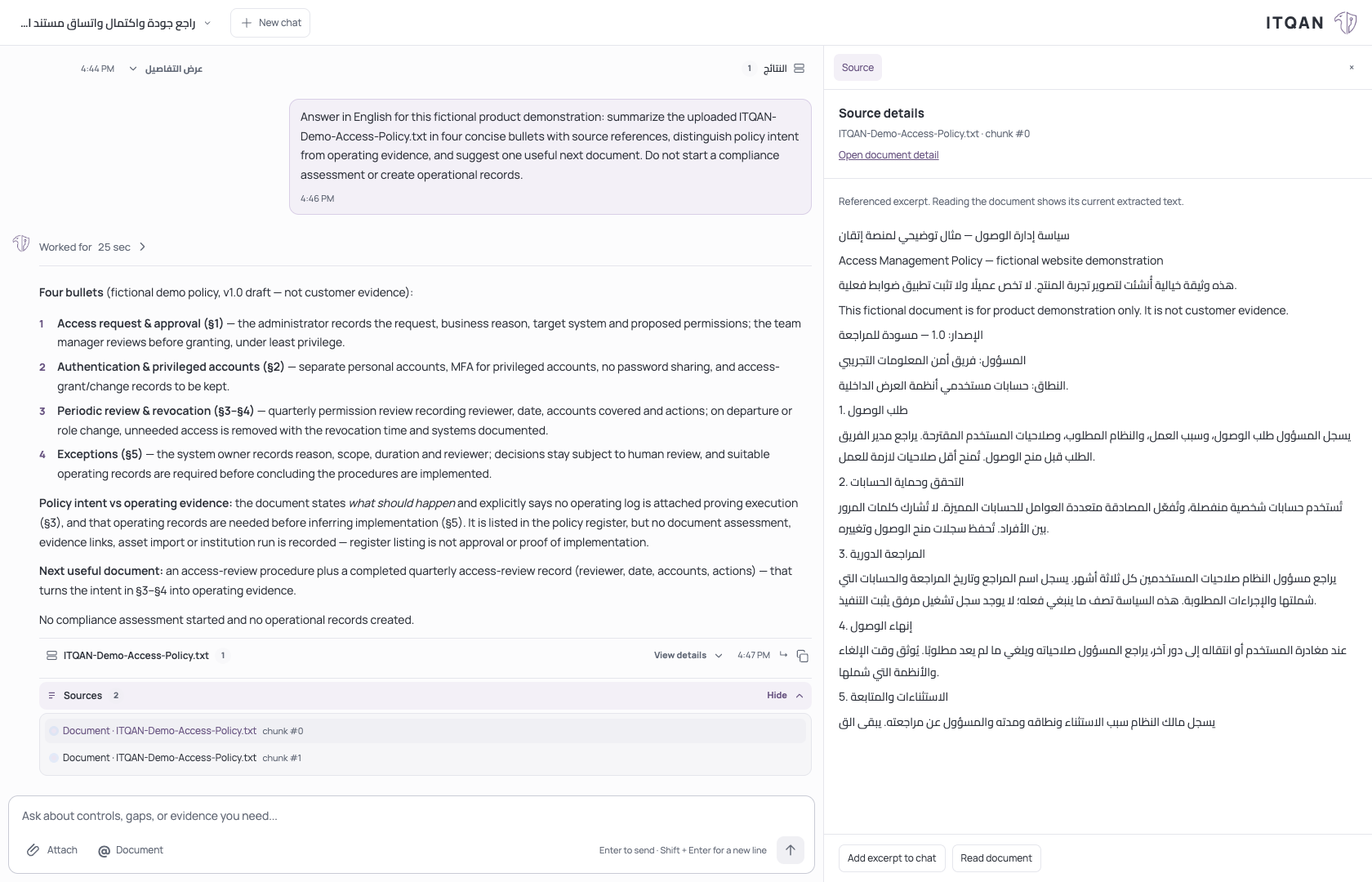
A real document conversation with fictional demo content. Reading and explanation, before a compliance assessment.
Click to enlarge ↗
FROM A QUESTION TO THE WORK
Start with the source.
Upload a document and ask a question in the same conversation. Reading, document quality review, assessment, and register import serve different purposes.
Read supported PDFs, Word files, spreadsheets, and images.
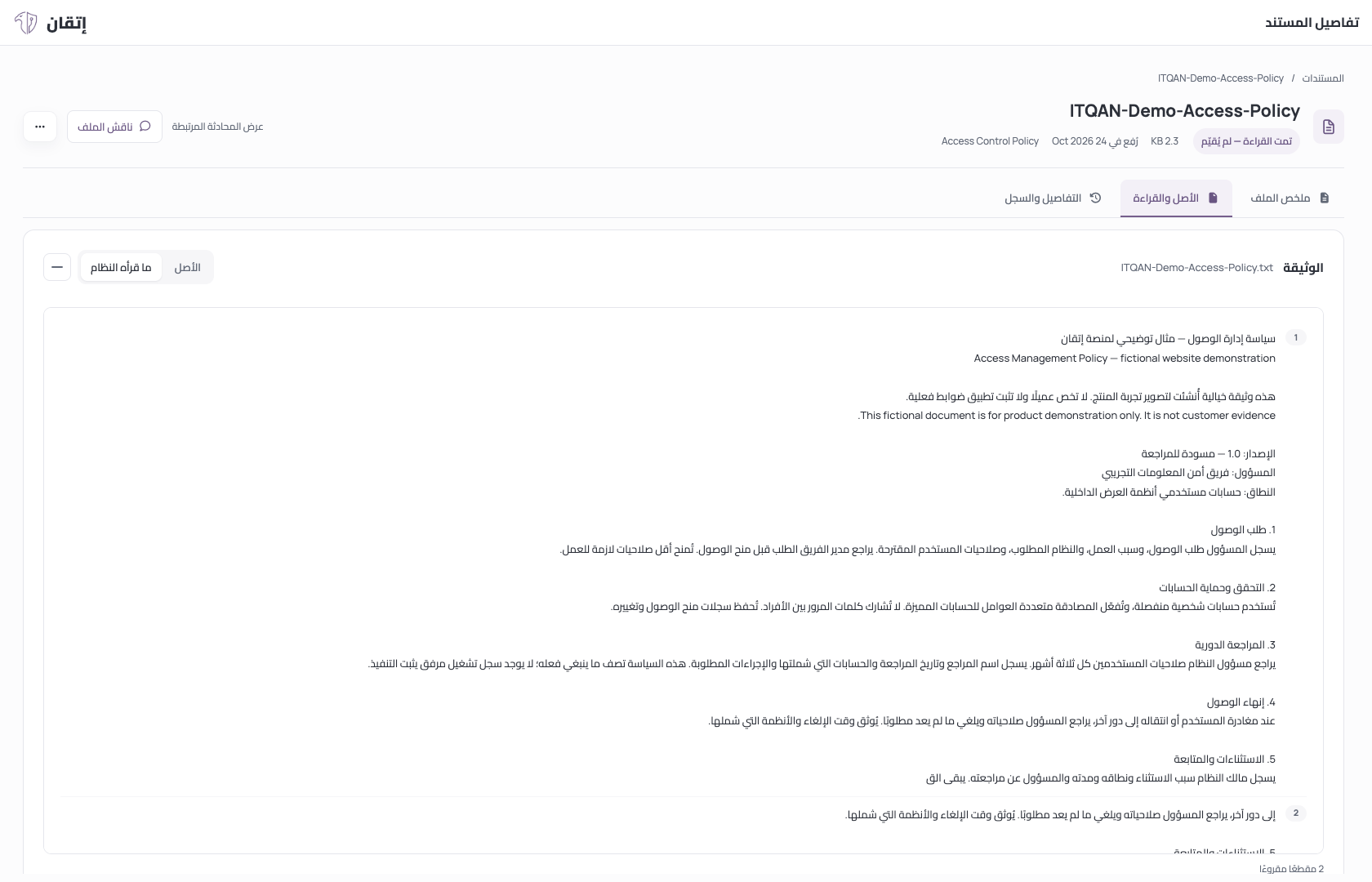
Arabic and English OCR with visible reading limits.
Return to source excerpts and available page locations.
02
Review the scope. Then assess.
Review suggested requirements and confirm what belongs in the assessment. Read saved outcomes with their reasons, rather than starting a new run to ask what happened.
Review and adjust selected requirements.
Distinguish policy content from evidence of operation.
See unresolved questions and the evidence they need.
03
Build a cumulative evidence picture.
Supported institutional assessments bring together current evidence from multiple documents. Accepted evidence relationships and changes to sources inform affected controls.
Keep documentary and operational evidence distinct.
Preserve human decisions and source history.
Follow the saved result into the next useful action.
The Arabic reading view of a fictional TXT document. Reading state stays separate from a compliance assessment.
Click to enlarge ↗
SCOPE OF USE
Assessment depends on the selected framework, scope, and evidence. Reading a document or accepting it as evidence does not establish that a control is operating effectively.